
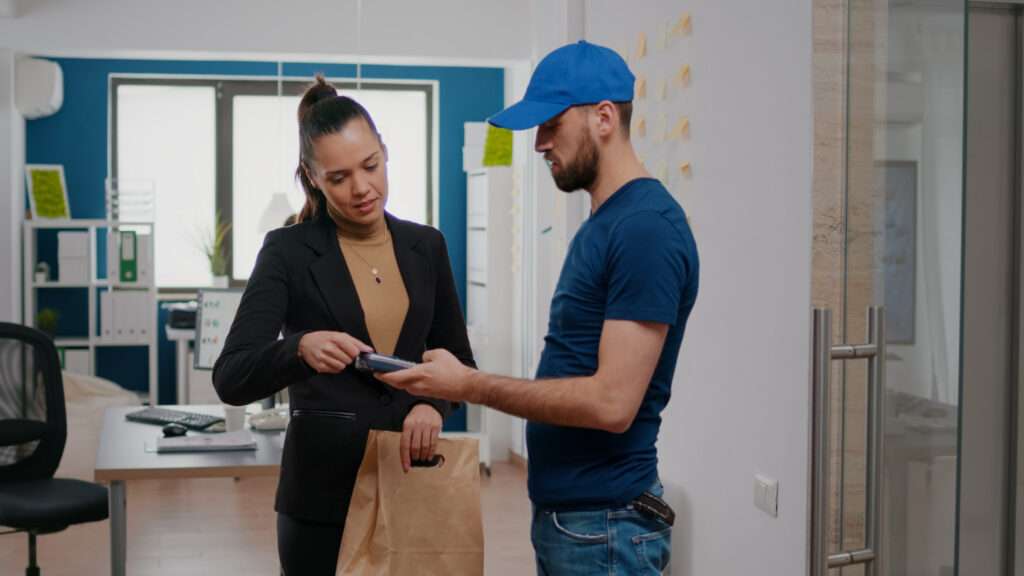
| Key Takeaways: 1. Proactive communication is more than a piece of information, it’s more about reducing the “waiting anxiety” that leads to customer churn. 2. Moving from vague phrases like “out for delivery” or “delivering soon” to a precise 30-minute window increases first-time delivery success and slashes labor costs per unit. 3. Meet customers on SMS and WhatsApp to ensure zero-friction engagement. Avoid forcing users into walled-off apps or portals. 4. Real-time tracking serves as a self-service support tool, potentially reducing call center inquiries by up to 60%. 5. Capture customer sentiment the moment the package is dropped. 24-hour delays lead to “feedback decay” and loss of actionable operational data. 6. Use tools like Shopox to communicate delays before they happen. Trust is built by managing friction with transparency, not by hiding from it. |
Logistics is a game of physical movement, but for your customer, it’s a game of anxiety. The moment a user clicks “buy,” a countdown starts. If that countdown happens in a vacuum, trust erodes. We often see brands pour millions into high-converting websites only to hand off the actual product to a “black hole” delivery process.
The reality is that delivery customer experience is the only part of the journey your customer actually feels in their hands. They don’t care about your warehouse management system or your fleet’s fuel efficiency. They care about their Tuesday afternoon. If they have to sit home for a four-hour window that turns into six, you’ve lost them.
Using delivery notifications is a defensive strategy against churn. When you bridge the gap between “shipped” and “delivered” with data, the customer trust will significantly increase.
I. Precision Timing
The phrase “Out for Delivery” is functionally useless. It’s too broad. For a customer, that could mean 9:00 AM or 7:00 PM. This ambiguity forces people to put their lives on hold. That’s a high price to pay for a package.
If you want to win, give them updates that actually mean something. This is the hard part. A 30-minute window only works if your software actually talks to the driver in real-time. If there’s a lag, that “arrival” alert is just a lie. You’re promising a time you can’t keep. To make it work, the routing and the driver’s actual progress have to stay in a tight, honest loop.
Legacy systems often struggle here because they don’t account for traffic, gate codes, or the three minutes a driver spends looking for parking. Look at the data: a narrow delivery window increases successful first-time drops by over 20%.
When we look at the second-order effects of precision, it’s not just about a happy customer. It’s about the “First-Time Delivery Rate.” Every time a driver misses a recipient because the notification was vague, your cost per stop doubles. You’re paying for the fuel, the labor, and the vehicle wear-and-tear twice.
By narrowing the window, you ensure the customer is actually behind the door. We built Shopox to sync the driver’s GPS directly to the customer’s screen so the “arrival” isn’t a guess. It’s a mathematical certainty. This reduces the carbon footprint and the labor cost per unit significantly, as drivers spend less time idling and more time dropping.
II. The Omni-Channel Loop
Email is where notifications go to die.Most people have thousands of unread emails. Yet, companies still use them for delivery updates. That’s a mistake. If a driver is five minutes away, the customer needs to know now. That means using SMS or WhatsApp.
But here is the friction point: nobody wants to download another app just to track a $30 blender. Your delivery customer experience should live inside the tools they already use. If you force a customer to log into a portal and remember a password just to see a tracking map, you’ve already failed. The goal is “zero-friction” information.
Think about the workflow. A customer receives a WhatsApp message with a live tracking link. They click it, see the van’s location, and can hit a “leave with neighbor” button if they have to run out.
This prevents the dreaded “We missed you” sticky note. Most companies fail here because their data is siloed. The SMS gateway doesn’t talk to the driver’s app, and the driver’s app doesn’t talk to the customer service portal.
You need a unified pipe where information flows without getting stuck in a middleman’s API. By centralizing these channels, you aren’t just sending messages; you’re creating a conversation that moves as fast as the delivery van does.
III. Feedback in Real-Time
Most brands ask for feedback three days after the delivery. By then, the “emotional heat” of the experience has cooled. The customer has forgotten that the driver was polite or that the box was slightly crushed. They just want to use the product. If there was a problem, they’ve likely already complained to their friends, but not to you. This is the “feedback decay” curve, and it’s lethal for operations managers.
The most effective delivery notifications best practices involve asking for a rating the second the status changes to “Delivered.” Why? Because that is when the data is most honest. If there is a problem, you want to know before they go to social media. A simple “How was your delivery?” text with a 1–5 star option is more valuable than a 20-question survey emailed a week later.
But let’s look at the pragmatics. Collecting feedback is only half the battle. The real work starts with what you do with that data. If a customer leaves a 1-star review because the package was left in the rain, your system should automatically trigger a “Recovery Protocol.” This isn’t just a SaaS buzzword; it’s a manual or automated workflow where a support lead reaches out within 30 minutes.
This is where you catch the “silent churners.” These are customers who had a mediocre experience—not bad enough to call support, but bad enough never to shop with you again. By integrating a one-tap feedback scale into the final delivery notification, you capture that sentiment. At zip24, we’ve observed that companies using Shopox to automate this immediate feedback see a massive jump in response rates.
More importantly, it allows operations managers to spot patterns. If one specific courier consistently gets 3-star ratings on Thursdays, you don’t have a “bad luck” problem; you have a systemic routing or staffing problem. Perhaps the Thursday route is overloaded, leading to rushed deliveries and poor service.
You can’t fix what you don’t measure in real-time. High-velocity feedback turns a logistical endpoint into a continuous improvement cycle that actually moves the needle on Net Promoter Scores (NPS).
IV. Internal Operations
Let’s talk about your overhead. “Where Is My Order” (WISMO) calls are the silent killer of logistics margins. Each time a customer calls your support line to ask for an update, it costs you money—often between $5 and $15 in labor and infrastructure per ticket.
For a high-volume business, this is a massive drain on profitability. If you are shipping 10,000 orders a month and 15% of those result in a support inquiry, you are spending $15,000 a month just to tell people where their stuff is.
The reality is that most WISMO calls are preventable. They are symptoms of a lack of transparency. If you provide real time delivery notifications and proofs of delivery, you are essentially providing a self-service support tool. When the customer can see the driver on a map or receive a “You are the 4th stop away” update, they don’t need to call you. They have the answer in their pocket.
The shift here is moving from a reactive “support” mindset to a proactive “information” mindset. It’s a heavy lift initially—integrating your TMS (Transport Management System) with a customer-facing UI is a technical headache that involves cleaning up messy carrier data. Legacy carriers often provide “milestone” data that is delayed or formatted in a way that’s hard for consumers to understand.
This is where Shopox changes the game. It acts as the translator between your complex back-end logistics and the customer’s need for simplicity.
By slashing WISMO calls by 40-60%, you free up your team to handle complex logistics issues rather than repeating tracking numbers over the phone. When you reduce the labor cost per unit by automating information flow, your margins finally have room to breathe.
V. Branding the Last Mile
The tracking page is the most viewed page in the entire e-commerce journey. People check it an average of 3.5 times per order. Yet, most companies send their customers to a generic, ugly carrier page. This is a massive wasted opportunity. You’ve paid for the acquisition, you’ve made the sale, and now you’re handing that precious attention back to a third-party logistics provider.
Instead, the tracking experience should be an extension of your brand. Use that space to recommend a complementary product or share a “how-to” video for the item they just bought. If you’re using Shopox, you can customize these touchpoints so they feel like a part of your ecosystem. It changes the delivery from a “utility” to an “experience.”
Think about the psychology of the “arrival phase.” The customer is at their peak level of excitement. This is the perfect time to offer a loyalty discount for their next order or invite them to join a community. It’s not just about selling more; it’s about staying top-of-mind.
Furthermore, a branded tracking page allows you to control the narrative when things go wrong. If there is a delay due to weather, a branded page can explain it in your brand’s voice, offering a “Sorry for the wait” perk immediately. This turns a negative touchpoint into a loyalty-building moment. You aren’t just shipping boxes; you’re managing a relationship.
Bonus Tip: The “Fail-Fast” Notification Protocol
The reality is that things go wrong. Trucks break down, drivers get stuck in unpredicted construction, and extreme weather happens. Most companies make the mistake of waiting until the end of the day or worse, the following morning to tell a customer their package isn’t coming. By then, the damage to your brand is already done. The customer has spent their evening frustrated, wondering why their expectations weren’t met.
A critical “Bonus Tip” for high-level operations: Send the “bad news” early. If your routing software detects that a driver is running 45 minutes behind, trigger a proactive “We’re running a bit late” notification before the original window expires. Do not wait for the customer to ask where their order is.
This transparency actually improves brand trust. It shows the customer that you are monitoring the process as closely as they are. When you provide an updated ETA immediately, you prevent the specific frustration of someone sitting by a window, waiting for a knock that isn’t coming. This protocol reduces negative feedback significantly because it removes the element of surprise—the primary driver of customer anger.
Look at the data: customers are surprisingly forgiving of delays if they are informed in real-time. They are unforgiving of being ignored. By integrating your driver’s live status with automated alerts through a tool like Shopox, you can turn a potential logistical failure into a proof point of your reliability. You are essentially saying, “We see the problem, and we’ve already adjusted for you.”
Trust isn’t built in one day. Moving from reactive apologies to proactive alerts is the hallmark of a mature delivery operation.
Conclusion
Improving your delivery customer experience isn’t about being “nice” or following a trend. It’s about the hard math of retention. High-quality delivery notifications best practices reduce failed deliveries, lower support costs, and drive repeat purchases.
The friction of implementation is real, and the transition from legacy “static” tracking to real-time updates is a hurdle for many ops managers. However, the data is clear: transparency builds a moat around your brand.By using tools like Shipox to bridge the gap between the warehouse and the doorstep, you turn your operations into your biggest competitive advantage.