
| Key Takeaways: 1. Overloaded vehicles increase fuel usage and wear, making proper load monitoring essential for controlling operating costs. 2. Route optimization software helps reduce fuel spend and improve delivery efficiency through smarter load distribution. 3. Real-time GPS and IoT tracking give instant visibility into vehicle capacity. 4. Automated dispatch balances deliveries across available fleet capacity, preventing overloads. 5. Delivery management software lowers cost per delivery by improving routing accuracy and overall load management. |
When delivery deadlines are tight, squeezing “just one more package” into the truck feels like smart efficiency. What’s a few extra pounds when you’re trying to maximize productivity and keep customers happy?
Here’s the reality check: overloaded vehicles consume 30% more fuel, increase maintenance needs, and risk compliance violations. That “one more package” can turn a profitable delivery run into a compliance nightmare costing thousands in penalties and repairs.
With the increase in online shopping, the logistics industry faces mounting pressure. More volume, tighter timelines, and rising operational costs. Manual processes don’t cut it anymore. You need systems that handle complexity, ensure safety, and keep your business running smoothly, without constant worry about vehicle compliance.
What is Real-Time Load Monitoring in Delivery Operations?
Real-time load monitoring isn’t just another tech buzzword. It’s a systematic approach to tracking vehicle capacity, weight distribution, and delivery assignments as they happen.
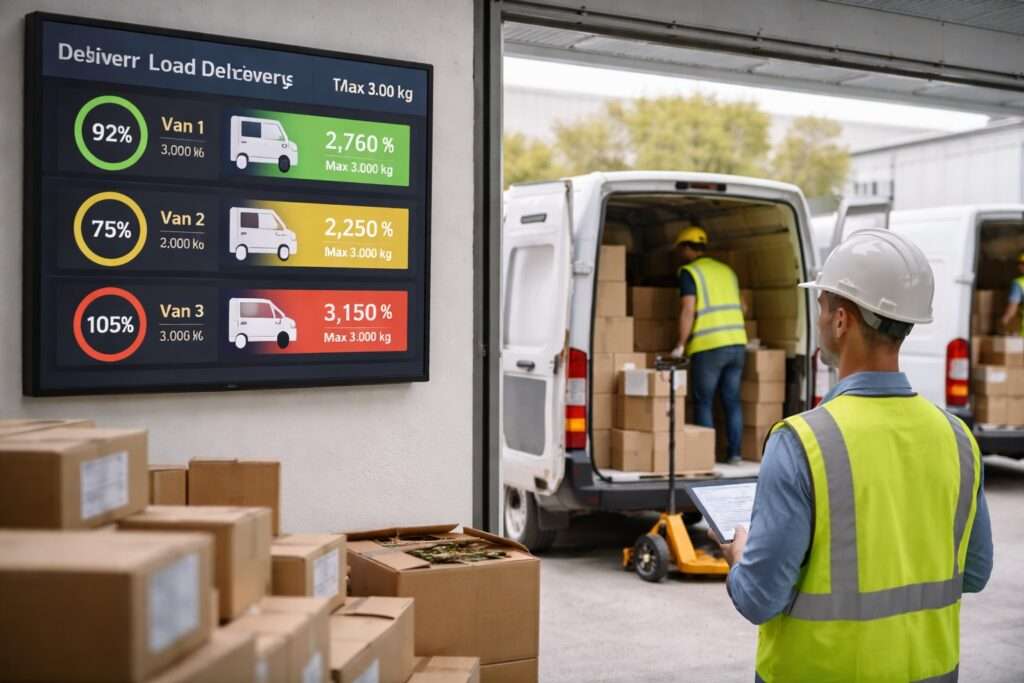
Drivers no longer have to eyeball whether there’s room for another shipment. Dispatchers don’t have to guess vehicle capacity. Load monitoring systems use GPS, IoT sensors, and DMS to provide real-time data for every vehicle in the fleet.
Modern load monitoring integrates directly with your delivery management system (DMS). It doesn’t exist in isolation. It works alongside route optimization to automatically allocate orders based on real vehicle capacity. Moreover, it alerts you immediately when a vehicle approaches its limits.
For delivery operations handling 50+ orders daily, this integration becomes non-negotiable. Manual tracking simply can’t keep pace with the variables: different package sizes, varying delivery locations, real-time traffic conditions, and shifting customer time windows.
The Real Consequences of Vehicle Overloading
When you think about overloading consequences, you picture obvious scenarios: getting pulled over at a weigh station or a vehicle breakdown. But the real costs are far more serious and ongoing.
Safety and Liability Risks
Large truck crashes result in thousands of fatalities annually, with improper loading being a significant contributing factor. Overloaded vehicles are handled differently. Braking distances increase by over 20% even with just a 10% overload, and weight imbalances can cause jackknifing or loss of vehicle control.
The Hidden Financial Drain
The financial impact extends well beyond fines:
- Maintenance Costs: Overloading is one of the top causes of unscheduled maintenance for trucks. Your maintenance budget balloons as vehicles spend more time in the shop than on the road.
- Fuel Consumption: An extra 100 pounds of vehicle weight can reduce miles per gallon by up to 2%. With a fleet of 10-20 vehicles, it results in thousands of dollars annually in fuel costs.
- Tire Degradation: Overloaded vehicles make tires run hotter as rubber becomes more pliable under extra weight, causing faster deflation and reduced lifespan.
Customer Experience Impact
When overloading leads to delays, missed deliveries, or damaged goods, you don’t just lose that one sale. You lose customer trust and lifetime value. Companies that fail to provide accurate tracking and timely deliveries face increased customer churn.
Regulatory Compliance
Transportation authorities don’t care about tight margins or ambitious delivery schedules. Overloading violations lead to fines ranging from hundreds to thousands of dollars per incident. Moreover, repeated offenses can jeopardize operating licenses.
How Real-Time Load Monitoring Technology Works
Real-time load monitoring combines several technologies to create a comprehensive visibility system for your fleet operations.
GPS and IoT Integration
Modern systems use GPS tracking combined with Internet of Things (IoT) sensors that monitor:
- Current vehicle weight and distribution
- Real-time location and route progress
- Engine performance metrics
- Fuel consumption patterns
These sensors communicate continuously with your central system, providing up-to-the-second data that dispatchers and managers can access from any device.
Automated Alerts and Preventive Measures
The system doesn’t just collect data; it acts on it. When a vehicle approaches capacity limits, automated alerts notify dispatchers before assignments are made. This preventive approach stops overloading before it happens, rather than discovering problems after the fact.
Integration with Delivery Management Systems
The real power comes from integration. When load monitoring connects with your DMS, the system can:
- Automatically calculate vehicle capacity
- Flag deliveries that would exceed vehicle limits
- Redistribute loads across available fleet resources
- Suggest optimal package assignments based on weight and route
This seamless integration eliminates manual calculations and guesswork, reducing human error significantly.
Key Benefits of Real-Time Load Monitoring Technology
Here’s how real-time load monitoring improved your overall delivery process:
- Preventing Overloads Before They Happen
Proactive monitoring shifts your operation from reactive firefighting to preventive management. Instead of discovering an overloaded vehicle at the weigh station, you prevent the assignment in the first place.
- Route Optimization and Fuel Savings
Companies using route optimization software report significant operational improvements. Research shows businesses can reduce fuel costs by 20-30% and achieve up to 63% more deliveries per vehicle per route through optimized routing.
Route optimization considers:
- Delivery time windows
- Real-time traffic conditions
- Vehicle capacity constraints
- Driver availability and skills
By factoring in load capacity alongside these variables, the system creates routes that are both efficient and compliant.
- Real-Time Visibility for All Stakeholders
Modern load monitoring provides transparency across your entire operation:
- Dispatchers see real-time capacity across the fleet
- Drivers receive optimized routes with manageable loads
- Managers access performance metrics and compliance data
- Customers get accurate ETAs and delivery updates
This visibility eliminates the “where’s my order?” calls and improves operational coordination.
- Data-Driven Decision Making
Load monitoring generates valuable operational data:
| Metric | Impact | Actionable Insight |
| Average load per vehicle | Capacity utilization rates | Identify underutilized fleet resources |
| Fuel consumption patterns | Cost per delivery | Optimize routes for efficiency |
| Delivery times by load weight | Service level performance | Set realistic customer expectations |
| Maintenance frequency | Vehicle reliability | Predict and prevent breakdowns |
These insights help you make strategic decisions about fleet size, vehicle types, and service offerings.
Implementing Load Monitoring: Best Practices
Implementing load monitoring successfully requires more than installing software. It depends on clear standards, trained teams, and consistent use of data.
Start with Clear Capacity Standards
Start by establishing clear capacity standards for every vehicle type in your fleet. Document maximum load limits, including gross vehicle weight rating (GVWR), axle weight restrictions, cubic capacity constraints, and any special handling requirements.
Having these standards clearly defined ensures consistent loading decisions and reduces the risk of overload-related issues.
Train Your Team
Equally important is training your team. Dispatchers, drivers, and warehouse staff should understand how load monitoring systems work, why capacity limits matter, how to respond to alerts, and the correct loading techniques. When everyone follows the same standards and processes, load management becomes proactive rather than reactive.
Use Data to Continuously Improve
Review load monitoring data regularly to identify patterns:
- Which routes approach capacity limits consistently?
- How can fleet composition be optimized?
- Where do delays most frequently occur?
- Are certain vehicles underutilized?
Integrate with Existing Systems
Choose solutions that connect with your current technology stack rather than requiring complete operational overhauls. Seamless integration accelerates adoption and reduces implementation friction.
Shipox Express: Load Monitoring in Action
Shipox Express integrates comprehensive load monitoring capabilities directly into its delivery management platform, serving over 15,000 users globally with proven last-mile delivery solutions.
Automatic Dispatch and Driver Allocation
The platform automatically dispatches orders to the nearest or most suitable drivers while considering the current load capacity. Drivers receive job notifications instantly through the mobile app and can accept assignments with full visibility into route and load requirements.
AI-Powered Route Optimization
Shipox leverages AI-powered algorithms to optimize delivery routes while factoring in vehicle capacity constraints. The system:
- Adjusts routes dynamically based on real-time conditions
- Reduces travel time and fuel costs through efficient routing
- Prevents delivery errors by matching loads to vehicle capabilities
Companies implementing route optimization solutions consistently report 5-15% improvements in route productivity and substantial cost reductions.
Real-Time Tracking for Proactive Management
The Shipox platform provides three integrated mobile applications:
- Customer App: Customers track orders in real-time with accurate ETAs, reducing anxiety and support inquiries.
- Rider App: Drivers access optimized routes, delivery details, and real-time navigation on Android and iOS devices. The app ensures efficient route management and proper load handling.
- Admin App: Managers gain full operational control with real-time order tracking, driver management, and performance insights accessible on the go.
Integration Capabilities
With 50+ integrations for stores, carriers, and e-commerce platforms, Shipox connects seamlessly to your existing tech stack. This interoperability ensures load monitoring data flows across your entire operation without creating information silos.
Conclusion
Real-time load monitoring transforms delivery operations from reactive problem-solving to proactive efficiency management. The technology prevents costly overloads, optimizes fuel consumption, ensures regulatory compliance, all while providing the data visibility modern logistics operations require.
For businesses serious about scaling delivery operations sustainably, load monitoring isn’t optional anymore. It’s the foundation of efficient, compliant, and profitable last-mile delivery.Ready to optimize your delivery operations? Book a Demo to see how Shipox Express can transform your delivery operations.