
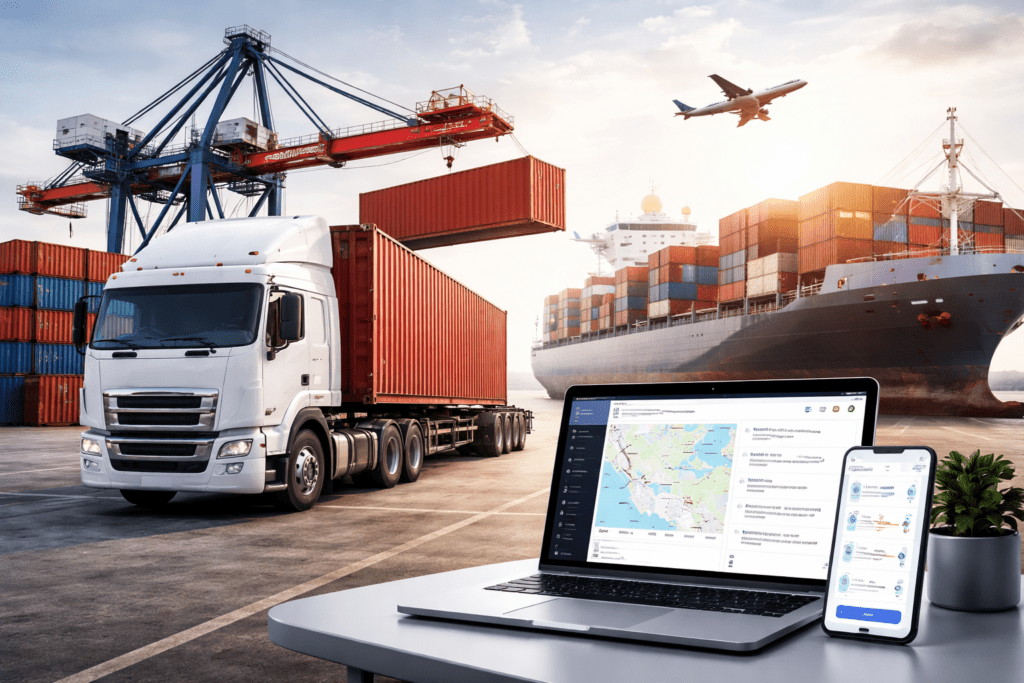
| Key Takeaways: 1. Automation, real-time visibility, and optimized routing can deliver 2–15% ROI on transportation spend. 2. Integrated systems eliminate data silos, duplicate entry, and conflicting shipment statuses. 3. Intelligent routing reduces fuel costs while supporting sustainability goals. 4. Automation handles routine workflows; broker and carrier partnerships resolve edge cases that technology can’t. 5. Phased TMS implementation—starting with visibility and dispatch, then analytics—typically delivers ROI within 6–18 months. |
Your container of industrial machinery cleared customs hours ago; however, three different systems display three different statuses. Your driver’s waiting. Your client’s calling. And you’re burning money on demurrage fees while trying to figure out which platform actually knows where your freight is.
If you’ve managed cross-border heavy transport, this isn’t hypothetical. It’s reality. Cross-border freight consistently faces visibility gaps, compliance complexity, and coordination breakdowns that cost the global logistics industry billions annually.
Research indicates that 10-25% of international shipments experience delays, often from preventable documentation or communication issues. However, there’s a shift in the industry.
Modern technology has fundamentally changed how companies address these challenges, eliminating entire categories of problems that once consumed hours of manual work.
The Cross-Border Challenge: Why Heavy Transport Gets Complicated
Before we explore solutions, let’s break down exactly where cross-border operations hit roadblocks. Understanding these pain points helps you identify which technology interventions will deliver the most impact for your specific operation.
Documentation Overload and Compliance Nightmares
Cross-border shipping means navigating multiple regulatory jurisdictions, including customs declarations, safety certifications, environmental compliance, and commercial documentation. For heavy transport, complexity multiplies with overweight permits, specialized equipment requirements, and hazmat classifications.
One missing document can strand a $200,000 shipment at the border while you expedite paperwork. Manual processes leave room for human error. A mistyped HS code (Harmonized System) or an incomplete commercial invoice triggers inspections, adding days of delay.
For time-sensitive heavy equipment deliveries, these delays translate directly to project setbacks and penalty clauses.
Visibility Black Holes That Cost You Money
The typical cross-border shipment passes through multiple hands: warehouse teams, drayage carriers, customs brokers, border inspection, and line-haul operators. Each handoff creates information gaps.
Without integrated systems, you’re coordinating across companies, time zones, and languages. “The shipment departed” could mean it left the warehouse, cleared customs, or simply exited someone’s field of vision.
That ambiguity results in delayed production schedules, missed delivery windows, and eroded customer trust.
Modal Coordination Chaos
Heavy transport frequently requires intermodal solutions: truck to rail to ship, or coordinating air freight for time-sensitive components. Each modal switch introduces delay risks and demands precise coordination.
When your oversized equipment needs to be transferred from a flatbed truck to rail car, then back to specialized transport, you need equipment availability, operator scheduling, and receiving vehicle coordination. Traditional phone-and-email coordination can’t match the speed modern supply chains demand.
Security and Risk Management Concerns
Cross-border heavy transport involves high-value cargo traveling through multiple jurisdictions, warehouses, and transfer points. Theft, damage, and regulatory violations pose significant financial and reputational risks.
Cargo theft results in losses exceeding $15-$35 billion annually worldwide, with cross-border shipments particularly vulnerable during border delays and transfers. Traditional tracking methods (periodic check-ins and paper logs) leave gaps that criminals exploit.
How Technology Transforms Cross-Border Logistics Operations
Here are the four fundamental forms of technology that run the modern logistics operations.
- Transportation Management Systems (TMS)
A TMS serves as your logistics command center, orchestrating everything from carrier selection to route optimization to cost analysis. Modern cloud-based TMS platforms like Shipox provide centralized visibility across your entire transportation network, automatically dispatching orders to optimal carriers and routes.
The application of this technology in logistics? A robust TMS reduces transportation costs through better route planning, load consolidation, and carrier performance tracking.
- Real-Time Tracking & IoT Sensors
GPS tracking combined with Internet of Things (IoT) sensors aids in cargo tracking and management. Real-time location data, temperature monitoring, shock sensors, and geofencing capabilities mean you know not just where your cargo is, but its condition throughout the journey.
This technology enables proactive problem-solving. If a refrigerated shipment’s temperature rises unexpectedly, you’re alerted immediately rather than discovering spoiled goods at the destination.
- Automated Documentation & AI-Powered Compliance
AI-powered systems now auto-populate documentation using data from your order management system, validating information against regulatory databases before submission.
This technology checks HS codes against current tariff schedules, verifies required certificates for specific product categories, and flags missing information before you hit “submit.” The result? Fewer rejected shipments and faster border clearance.
- Data Analytics & Predictive Intelligence
Modern TMS platforms don’t just track current shipments; they learn from historical data to predict and prevent problems. Predictive analytics identify patterns:
- Which carriers have the best on-time performance for certain lanes?
- Which border crossings experience delays on specific days?
- Which seasons see increased inspection rates?
This intelligence enables proactive decision-making. If your analytics show that eastbound shipments through a particular crossing experience 4-hour delays on Fridays, you route Thursday shipments differently or adjust customer delivery promises accordingly.
- Sustainable Logistics
Route optimization isn’t just cost-effective, it’s environmentally responsible. AI-powered routing reduces unnecessary miles driven, cutting fuel consumption and emissions. Research shows that optimized freight routing can produce significant carbon and fuel savings compared to traditional static routing.
Modern TMS platforms provide carbon footprint tracking and reporting. Shipox’s route optimization algorithms, for instance, factor in both cost efficiency and emissions reduction, helping businesses balance profitability with environmental responsibility.
How to Manage Cross-Border Heavy Transport: A Step-by-Step Framework
Here’s your practical roadmap for transforming cross-border heavy transport operations with technology.
Step 1: Implement a Centralized Transportation Management System
A centralized TMS creates a single source of truth for all shipments, carriers, costs, and performance metrics.
Start by evaluating TMS platforms that offer cross-border functionality, including multi-currency support, international compliance modules, and integration capabilities with your existing systems (ERP, WMS, e-commerce platforms). Look for cloud-based solutions that don’t require heavy IT infrastructure.
Step 2: Automate Compliance and Documentation Workflows
Manual documentation is your biggest risk factor for delays and penalties. Implement systems that auto-populate customs forms using product data from your inventory management system.
Use validation tools that check HS codes, restricted party screening, and certificate requirements before submission. Build digital workflows where documents route automatically for approval rather than sitting in email inboxes.
Step 3: Enable Real-Time Visibility for All Stakeholders
Deploy tracking solutions that provide live updates to all relevant parties. This includes GPS tracking for drivers, automated status notifications for customers, and dashboard visibility for your operations team. Ensure your rider and admin apps provide real-time access to critical information.
Step 4: Optimize Routes and Modal Choices Intelligently
Dynamic route optimization adapts better to real-world conditions. Use AI-powered routing that considers multiple variables: distance, traffic patterns, border crossing wait times, fuel costs, delivery windows, and driver hours-of-service regulations.
For heavy transport specifically, factor in weight restrictions, bridge clearances, and permit requirements for different routes.
Step 5: Build Proactive Risk Management Protocols
Implement geofencing alerts that notify you if shipments deviate from planned routes or stop unexpectedly. Use IoT sensors to monitor cargo conditions (temperature, humidity, shock/vibration for sensitive equipment). Create automated escalation protocols: if a shipment is stationary at an unauthorized location for more than 30 minutes, your security team gets an alert.
Step 6: Integrate Your Entire Logistics Ecosystem
Choose technology partners that prioritize integrations. Your TMS should connect with your accounting software, customer relationship management (CRM) system, warehouse management system (WMS), and carrier platforms through APIs. This eliminates manual data transfers and ensures updates in one system automatically reflect everywhere.
Best Practices for Smooth Cross-Border Operations
Technology provides the tools, but strategic implementation and operational discipline determine success. Here’s how to maximize efficiency by blending cutting-edge technology with time-tested logistics fundamentals.
Leverage Predictive Analytics for Proactive Problem-Solving
Don’t wait for problems to occur—anticipate them. Use your TMS data to identify patterns: Which borders experience delays during specific seasons? Which carriers have the best performance for particular routes? Advanced analytics can contribute additional ROI by helping you make smarter decisions before issues arise.
Implement Continuous Improvement Through Data
Your TMS collects valuable performance data with every shipment. Use it strategically. Monthly reviews of carrier performance, border crossing times, documentation error rates, and delivery windows help you refine processes continuously.
Create dashboards that track key performance indicators (KPIs): average customs clearance time, percentage of shipments requiring additional documentation, on-time delivery rates, and cost per mile. When you measure consistently, you can improve systematically.
Use Automated Communication to Keep Everyone Aligned
Automated status notifications ensure customers, warehouse staff, and drivers all operate from the same information. When a shipment clears customs, everyone who needs to know gets updated simultaneously. No more phone tag or email chains.
This transparency builds trust with customers while reducing your team’s administrative workload.
Build Strong Relationships With Brokers and Carriers
Technology optimizes processes, but relationships solve exceptions. Cultivate partnerships with reliable customs brokers and carriers who understand your specific product categories and documentation requirements. When an unexpected issue arises—and it will—these relationships become invaluable.
Maintain Rigorous Documentation Protocols
Even with automation, establish clear protocols for documentation preparation and review. Assign specific team members the responsibility for verifying that automated systems are pulling correct product classifications, proper certificates of origin, and accurate valuations.
Create checklists for different product categories that outline required documentation. While your TMS automates much of this, human oversight catches edge cases that algorithms might miss.
Invest in Ongoing Compliance Training
International trade regulations change frequently. Ensure your team receives regular training on customs regulations, safety requirements, and documentation standards for your key trade lanes.
Subscribe to regulatory update services and designate a team member to monitor changes affecting your operations. When new regulations take effect, update your TMS business rules accordingly.
Shipox Express: Your Technology Partner for Cross-Border Success
Shipox Express delivers a comprehensive Delivery Management System (DMS) purpose-built for cross-border logistics complexity. Here’s how it addresses your operational challenges:
- Unified Platform: Orchestrates dispatch, tracking, documentation, and delivery. Eliminates data silos through 50+ integrations with e-commerce, ERP, and carrier systems.
- Automated Data Flow: Orders trigger documentation generation, carrier selection, and customs clearance without manual intervention
- AI-Powered Optimization: Automate dispatch and route planning to reduce fuel consumption by 15-25% while improving delivery times.
- Mobile Command Centers: Rider App (Android/iOS) for drivers, Admin App for operations managers, and Customer App for clients provide real-time GPS tracking, automated updates, and on-the-go management.
Conclusion
Cross-border heavy transport complexity doesn’t require sleepless nights. Modern transportation management technology transforms traditional pain points into competitive advantages.
Companies winning in today’s logistics environment leverage technology to operate smarter, faster, and more sustainably.
Shipox Express provides the integrated platform, ecosystem connections, and measurable ROI that turn cross-border challenges into operational simplicity. Want to build the foundation for sustainable growth? Book a demo.