
Key Takeaways
- Warehouse bottlenecks during rapid growth rarely appear all at once. They build slowly until the volume reaches the point where everything breaks at once.
- Most bottlenecks trace back to the same problems: wrong inventory placement, manual processes kept too long, and systems that don’t talk to each other.
- Growth doesn’t create warehouse problems. It finds the ones already hiding there.
- Space that felt fine last quarter can become a liability when order volume doubles.
- Picking speed, receiving time, and dock-to-stock gaps are where most delays actually start.
- Zip24’s Storfox WMS gives growing warehouses the visibility and structure to catch these problems before customers notice them.
Your warehouse hit 600 orders a week last quarter. This quarter, it’s pushing 900. Nothing else changed on paper. But pickers are walking more. The dock sits backed up by mid-morning. Inventory discrepancies that used to be rare are now a daily conversation.
That’s not a staffing problem; it’s not bad luck. That’s what rapid growth does to a warehouse that wasn’t built for it.
Bottlenecks during growth don’t usually show up in one dramatic moment. They accumulate. A manual process that worked at 200 orders a day starts falling apart at 500. A storage layout that made sense when you stocked 300 SKUs becomes chaotic at 800. A system that was good enough when your team was five people creates real damage when your team is twenty.
This guide looks at what actually causes warehouse bottlenecks during rapid growth, where the warning signs appear first, and how businesses working with Zip24 are structured to stay ahead of them.
The Reasons for Growth and Bottlenecks Go Together
Warehouses depend on three things working at the same time: the right product in the right place, available when someone needs it, and a team that can move it fast enough to meet demand.
At low volume, you can paper over gaps. Someone knows where the missing pallet usually ends up. A supervisor catches the mislabeled carton before it ships. The pick list has an error, but the picker has been there long enough to spot it.
When volume climbs fast, none of that works anymore. The same gap that one person caught last month now slips through because that person is handling three other problems at the same time.
That’s the core reason warehouse bottlenecks during rapid growth keep appearing. Growth removes the buffer that once hid operational weaknesses.
Inventory Accuracy Falls Apart First
Most warehouse managers say inventory accuracy is their biggest problem during growth. And most of them are right.
When you add SKUs, expand to new sales channels, or start shipping from multiple locations, the inventory picture gets harder to maintain. Stock levels drift. Products end up stored wherever space is available, not where they belong. Cycle counts that used to take a morning now take most of the day.
The downstream effect is real:
- Pickers go to a bin location, and the product isn’t there.
- Orders get confirmed on products that are technically out of stock.
- Teams spend time searching for inventory instead of moving it.
- Returns and adjustments pile up because no one caught the discrepancy early enough.
None of this looks catastrophic on its own. But it adds time to every order moving through the building. At scale, that time becomes a serious problem.
Manual Processes That Worked Before
This one is hard for teams to admit because it means the system they built isn’t working anymore.
Printed pick sheets, handwritten tallies, and spreadsheets updated at the end of a shift, these tools aren’t always wrong. At low volume, they’re often fine. The problem is that they don’t scale. They depend on someone doing the right thing at the right time, without skipping a step. When order volume doubles, and the team is under pressure, those conditions stop existing.
The errors manual processes produce look small individually:
- A quantity was entered incorrectly,
- A bin location updated with yesterday’s count,
- A shipping label was printed for the wrong order.
But each one creates a correction. Each correction steals time from actual fulfilment. When you’re running at full capacity, there’s no time for that.
Poor Layout and Space That Was Never Designed to Scale
A lot of warehouse layouts were designed to handle a specific type and volume of product. That design made sense at the time. It may not make sense now.
During rapid growth, two things happen to warehouse layouts. First, available space fills up faster than anyone expected. New inventory gets placed wherever there’s room, not where it should go operationally. Second, picking routes that were efficient at a certain SKU mix becomes inefficient when the mix changes.
Common layout problems during growth:
- Fast-moving items were stored in inconvenient locations because that’s where space was available,
- Receiving and shipping areas are competing for the same physical space during peak hours,
- Aisles that worked for one picker at a time are now creating congestion with three,
- No clear separation between inbound, storage, and outbound areas.
These don’t feel like bottlenecks at first. They feel like we need to clean up the floor. But they cause real delays on every shift, and those delays don’t fix themselves as volume keeps climbing.
The Staffing and Training Gap
Hiring for a growing warehouse is hard. Training for one is harder.
When order volume spikes, the immediate response is usually to add headcount. That makes sense. The problem is that new employees in a warehouse without structured workflows don’t operate at the same speed or accuracy as experienced staff. And during rapid growth, most warehouses are too busy to train people properly.
The result:
- New staff learn by watching, which means they pick up whatever habits the person next to them has, good or bad,
- Error rates rise during peak periods when teams include the most new faces,
- Supervisors spend time correcting instead of managing,
- Turnover climbs because the job feels chaotic and hard to learn.
Clear, documented workflows don’t solve the staffing problem entirely. But they reduce how much a warehouse’s performance depends on who shows up that morning.
Shipping and Receiving Both Back Up
The receiving dock and the shipping dock are where warehouse bottlenecks during rapid growth become most visible to people outside the building.
When inbound trucks arrive faster than the team can process them, inventory doesn’t get updated in time. That means picking can begin on stock that hasn’t been properly received, located, or counted. When outbound packing can’t keep pace with picking, shipments start missing carrier cutoffs. Missing carrier cutoffs means delayed deliveries. Delayed deliveries mean customer complaints.
Dock congestion during rapid growth usually comes from:
- No scheduled receiving windows, so trucks arrive whenever,
- A dock team that hasn’t grown alongside order volume,
- No live visibility into what’s been received and what’s still waiting,
- Outbound volume is hitting the dock at the same time as inbound trucks are unloading.
None of this is unsolvable. But it needs a system behind it, not a workaround.
Disconnected Systems Make Everything Slower
A common pattern during rapid growth: a business adds tools as it scales, one at a time, without thinking about whether they communicate with each other.
An order management system here. An inventory tool there. A shipping platform bolted on when carrier volume required it. A separate reporting spreadsheet because none of the above gives management what they need.
When these systems don’t sync properly, inventory updates move slowly. Order data gets entered more than once. Stock levels visible to the sales team don’t reflect what’s actually on the floor. Staff switch between platforms to complete tasks that should happen in one place.
A sync delay that sounds minor can affect hundreds of orders within a few hours. In a fast-growing warehouse, that kind of lag isn’t a technical inconvenience. It’s a warehouse bottleneck that traces directly back to tooling decisions made during growth.
How Zip24 Addresses These Causes
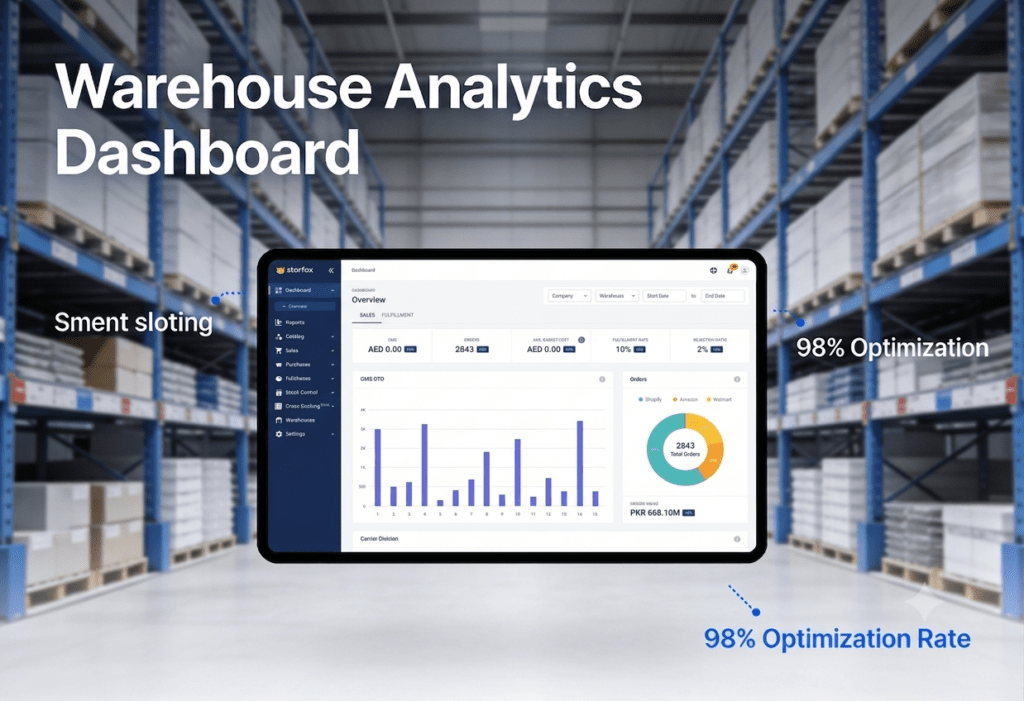
Zip24’s Storfox WMS is built to address the operational gaps that show up during warehouse growth, not after things have already broken down.
- Inventory Control in One Place
Storfox centralizes receiving, stock levels, and order data in a single system. Teams aren’t checking multiple platforms to confirm what’s actually available. That accuracy reduces the mislocation and discrepancy problems that slow picking down.
- Real-Time Visibility Across the Floor
Zip24 gives warehouse managers a live view of what’s moving, where it is, and where it’s falling behind. This is different from an end-of-day report. Problems get caught during the shift, not the morning after.
- Structured Workflows That Don’t Depend on Memory
Storfox guides teams through receiving, putaway, picking, packing, and shipping with system-driven steps. New staff can operate more consistently from day one because the process lives in the system, not in someone’s head.
- Scalable Without Rebuilding
As order volume grows, Zip24 scales with it. Businesses don’t need to replace their warehouse platform every time volume doubles. The system handles more without forcing an operational reset.
- Integration Across the Supply Chain
Zip24 connects with e-commerce platforms, order management systems, and delivery tools so that data moves cleanly across the operation. Fewer manual entries. Fewer sync gaps. Fewer bottlenecks that start with a missed update.
Signs Your Warehouse Is Already Past a Bottleneck
Some of these questions are worth asking your team directly:
- Is inventory on the system regularly different from what’s physically on the shelf?
- Are pickers walking further now than they were six months ago?
- Do trucks regularly wait at the dock for more than thirty minutes?
- Are supervisors spending most of their shift resolving exceptions rather than managing?
- Is the customer service fielding more delivery complaints than last quarter?
- Are returns sitting unprocessed for more than a couple of days?
If several of these are true, the bottleneck isn’t coming. It’s already there.
What Growing Businesses Get Wrong
- Hiring Before Fixing the Process
Adding people to a broken workflow makes the workflow noisier, not faster. Headcount doesn’t compensate for structural gaps.
- Assuming the Layout Will Scale Itself
A floor plan designed for a smaller operation doesn’t expand gracefully. It needs active review as the SKU count and order volume change.
- Waiting for a Big Disruption to Act
Most warehouse bottlenecks get addressed after a missed carrier cutoff or a customer escalation. By that point, the problem has already cost something.
- Treating Inventory Accuracy as a Quarterly Task
Inventory doesn’t stay accurate on its own. It needs consistent attention as the business grows.
- Running Too Many Disconnected Tools
Every gap between systems is a point where information slows down or goes wrong. During growth, those gaps compound.
Conclusion
Rapid growth is the goal for most businesses. But warehouses that weren’t built to scale create serious operational drag the moment volume climbs beyond what the current layout, staffing, and systems can handle.
What causes warehouse bottlenecks during rapid growth isn’t usually one big failure. It’s a collection of smaller problems that each became harder to manage as volume increased. Inventory drifted. Layouts weren’t updated. Manual processes were kept too long. Systems didn’t connect. Staff had to compensate for gaps that should have been filled by the structure.
The businesses that move through rapid growth without major warehouse disruption are the ones that fixed these problems early with real-time data, documented workflows, and systems built to handle more than today’s volume.
That’s what Zip24 is designed to support. Not just managing the warehouse you have right now. Building the warehouse that your next stage of growth actually needs.